Proponents of intellectual property frequently mix together distinct concepts: the different types of IP (patent, copyright, trademark, trade secret), along with fraud, plagiarism, stealing, piracy, contract breach, lying, dishonesty, attribution, and credit. These are not the same thing. I have addressed this confusion at length elsewhere (see the resources below).
A common residual defense of trademark law is that, whatever its excesses, it is at least an attempt to stop fraud. It is not.
Trademark infringement does not require the plaintiff to prove fraud. It requires only a showing of consumer confusion—and not even actual confusion, merely a likelihood of confusion. For famous marks, anti-dilution (blurring or tarnishment) claims do not require likelihood of confusion at all. The cause of action belongs to the trademark holder, not to any customer who was supposedly confused or defrauded. The holder is not the victim. If the concern were genuine fraud, the right to sue would belong to the buyer whose consent was obtained by deception. It does not. [continue reading…]
This video from Fireship explores the trend of reverse-engineering proprietary software, focusing on the recent viral phenomenon where users are essentially making “every app on Earth” open-source.
Key Takeaways:
The Artcraft Project (0:00 – 1:34): A developer named Brandon Thomas rebuilt seven Adobe Creative Cloud applications in Rust after becoming frustrated with Adobe’s subscription model. While these versions are free and run on Linux, the narrator notes they currently lack the polish and performance of the originals.
Reverse Engineer Anything (REA) (0:30 – 4:12): The video introduces a new project called Reverse Engineer Anything (REA), which leverages tools like Ghidra and AI agents to decompile native binaries (like EXE and DLL files) into human-readable code. This allows developers to inspect how specific features work and then reimplement them in their own projects.
Vibe-Driven Development (4:13 – 5:56): The narrator showcases a custom database backend called Studbase, created by reverse-engineering Supabase. The video also highlights Apify, the sponsor, whose MCP (Model Context Protocol) server allows AI agents to connect to thousands of tools—such as scrapers—to automate tasks like tracking social media data.
He indicated he is not quite sure he is agreement with me on IP. I sent him this note:
I am surprised you are not clear on IP. That one is easier to get than argumentation ethics. If you have any kind of understanding of the Austro-libertarian principles of self-ownership, homesteading, and contract, it is not difficult to see that it is impossible to have IP rights; they are utterly and completely incompatible with these libertarian rights. If you want to discuss this on zoom etc, I’d be happy to do so, because this is a very important issue to get right. If you are writing a comprehensive, systematic, and rigorous treatment of libertarian principles, you must cover this topic and get it right. Don’t be like David Friedman, Michael Huemer, J.C. Lester, who are weak on this terribly important issue.1
See David Rode, “Murphy Brown: Why The Popular ’80s Sitcom Is Impossible To Stream,” TV Line (Sept. 20, 2026). Anyone who is in favor of copyright and also a fan of Murphy Brown or any other show that can’t be accessed now due to these problems–kwitcher bitchin’.
Wow. h/t @gregmorin “One for the “copyright destroys culture” files. Tv show lost due to intractable IP rights.”
No offense, Objectivists and fascist pro-IP “libertarians”
https://t.co/NtSPVpFglo nb @jeffreytucker
Here’s Why You Can’t Stream ‘Murphy Brown’ (Decider, 2018) — music rights plus the fact that Warner Bros., not CBS, produced it, so it was never in the CBS All Access library.
I formed the Center for the Study of Innovative Freedom (C4SIF) back in October 20131 to separate my libertarian-related anti-IP writings from my other IP writings and to form a center dedicated to freedom and innovation. As our mission statement in the sidebar clearly states:
We are for property rights, free markets, competition, commerce, cooperation, and the voluntary sharing of knowledge, and oppose IP laws, which systematically impede or hamper innovation.
In other words, we are against IP because we are in favor of innovation and property rights, and freedom, liberty, and justice. We are not against IP just for the hell of it, but because we recognize that IP law violates property rights, is unjust, commits aggression, restricts human freedom, impedes and distorts innovation, creativity, free expression, artistic freedom, freedom of speech, and freedom of the press. [continue reading…]
I re-post it here since it’s not unsound, and as I apparently qualify for the very restrictive fascist copyright license the Mises Institute is trying to slap on this piece—CC-BY-NC-ND (no doubt without the author’s knowledge or consent, making this license’s effectiveness questionable)1 —since my site is (I guess?) “non-commercial,” whatever that means. I guess they don’t want a “commercial” site (whatever that is; why an ostensibly pro-capitalist, pro-free market organization hates the profit motive is unclear) republishing their pro-freedom message—wouldn’t want to spread the ideas of liberty without some control and oversight! And I guess they don’t want any translations made—that is prohibited by the “ND”, or no derivative works, part. [continue reading…]
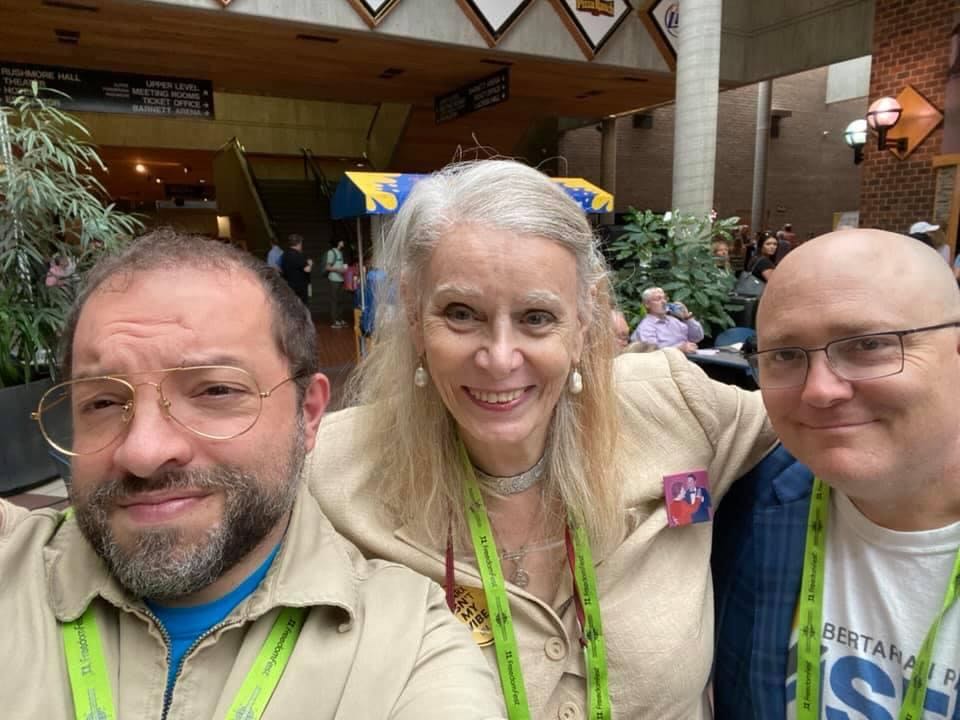
I have occasionally corresponded with Deirdre McCloskey, and met the good doctor in person at FreedomFest in Rapid City, South Dakota (with my buddy Juan Carpio) in July 2021.
A venture-backed referral platform registered ATTICUS for “legal services,” sent a cease-and-desist to California PI lawyer Atticus Wegman demanding he stop using his own given name, and is now being sued in C.D. Cal. for cancellation of the mark on nonuse, abandonment, and lack of quality control. That is trademark functioning as a state monopoly over a word, used to impose costs on a competitor (and on a man using his own name)—the pattern Kinsella has filed for years under “trademark horror stories,” not a genuine fraud claim belonging to confused clients. [continue reading…]
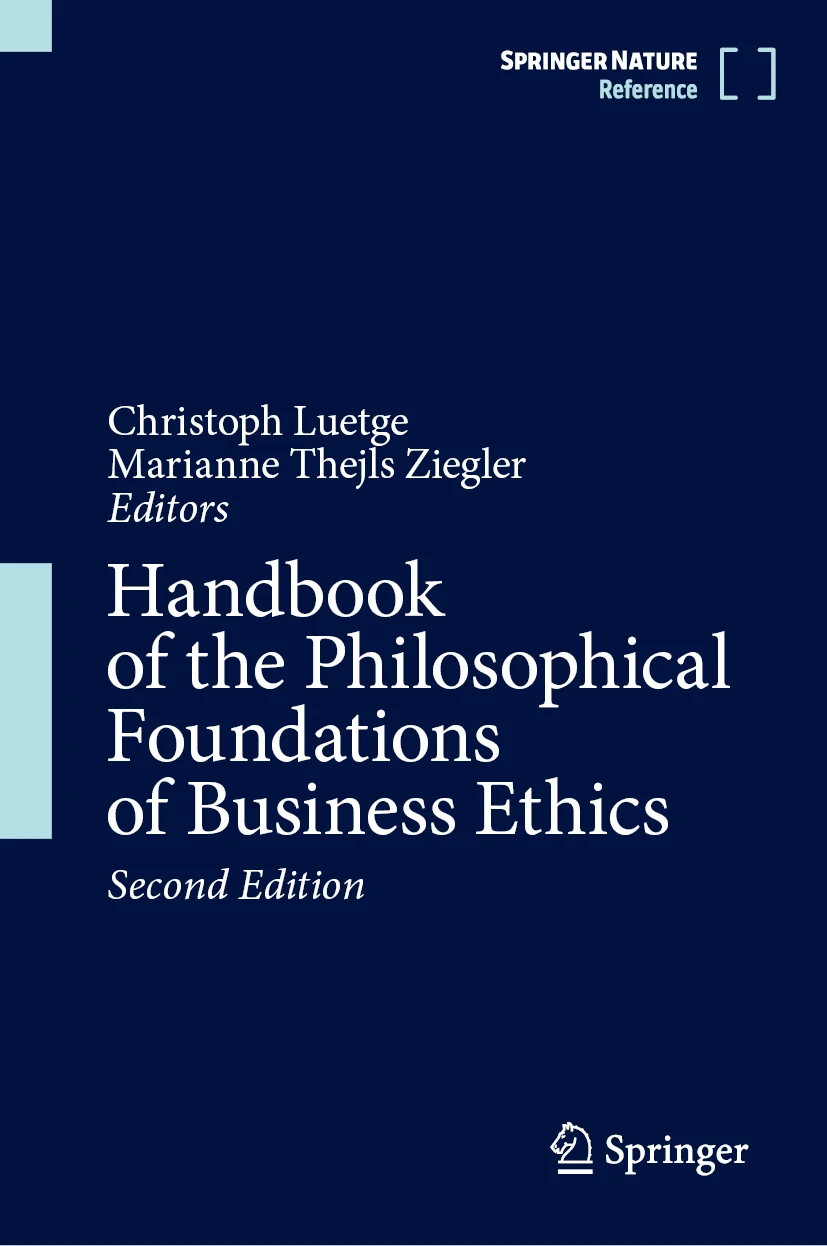
Handbook of the Philosophical Foundations of Business Ethics, Christoph Luetge and Marianne Thejls Ziegler, eds. (Springer, Dordrecht 2026) has been published, including my chapter “The Problem with Intellectual Property.” Published as of Aug. 29, 2026; https://doi.org/10.1007/978-94-007-6176-6_99-1. This chapter is based on Stephan Kinsella, “The Problem with Intellectual Property,” Papinian Press Occasional Paper, No. 2 (May 15, 2025) [v.1.1]. See further background details there.
In my journey from political blank slate, to rejecting both Democrats and Republicans, to embracing Randian minarchist libertarianism, and then (six months later, as the joke goes) full anarchism, my biggest stumbling block wasn’t the roads (ha ha) or even the police, courts, or military.
Nope, it was so-called “intellectual property (IP).”
Indoctrinated as I was, I couldn’t see how creativity and productivity could exist without patent and copyright protections. Worse, I thought IP was good and true, just and moral, as Rand (and my college professors) insisted. [continue reading…]
In Ayn Rand’s Atlas Shrugged there is a famous scene when a series of irrational mistakes lead to the Taggart Comet disaster. It is caused when railroad officials, under political pressure from a powerful passenger and unwilling to take responsibility, ordered the Comet into an eight-mile mountain tunnel with an unsafe coal-burning locomotive instead of a diesel. The train stalled from the fumes, passengers and crew asphyxiated, and an oncoming Army munitions train crashed into it, triggering an explosion that permanently sealed the tunnel. The catastrophe resulted from the broader collapse of competence and judgment under collectivist policies that had driven capable people out of the system.
Rand’s description in effect blames the victim-passengers for sharing the irrational views that led to it. She starts out:
It is said that catastrophes are a matter of pure chance, and there were those who would have said that the passengers of the Comet were not guilty or responsible for the thing that happened to them.
As noted here, “Ayn Rand’s newsletters used to end with a “Horror File” of monstrous but true quotations.”
Along those lines, it’s time to collect some choice trademark horror stories in one place. The main post will be here, on the Mises Blog, but I’ll cross-post the initial post here too. But look there for updates (or to add suggestions in the comments). (Update: I might as well also list here similar examples from patent, copyright, and even trade secret. See below.)
The Center for the Study of Innovative Freedom (C4SIF) is dedicated to building public awareness of the manner in which so-called “intellectual property” (IP) laws and policies impede innovation, creativity, communication, learning, knowledge, emulation, and information sharing. We are for property rights, free markets, competition, commerce, cooperation, and the voluntary sharing of knowledge, and oppose IP laws, which systematically impede or hamper innovation. IP law should be completely and immediately abolished.
We provide news commentary and analysis and scholarly resources from our unique pro-property, pro-market, pro-innovation perspective.






Follow Us!